Saluuuut! At the very beginning of my research on "Multilingual Concept" in programming, I realised something interesting about this topic. To be honest, I just wanted to use some Python code within Java, however, in this way, I faced lots of different terminologies! They are completely confusing. And even worse, people use different terms for the same concept!
Then I started searching for a globally accurate definition for these concepts. After a while, I found a great paper: "Polyglot Software Development: Wait, What?"[1] In this paper, they proposed a conceptual model to define these terms as precisely as possible. In this blog post, I am going to tell you simple definitions of these concepts, practical examples, and code snippets.
So, if you are confused about these strange terminologies like I was, or you are curious enough to learn more about them, this blog post fits you.
Introduction
In modern software development, using multiple languages is common across almost all activities. The way these languages interact to complete a task can vary from application to application.
But why does clearly defining these interactions even matter? As modern systems increasingly combine different programming paradigms and languages, maintaining them is a massive challenge, taking up an estimated 80% of developers' time and effort. Researchers are actively studying how to build high-quality models to measure and improve the maintainability of these complex, multi-language, and multi-paradigm systems [2]. Before we can effectively analyse, debug, or reduce the maintenance costs of these systems, we first need to agree on what we are actually building! However, let's take a step back and see what we should call these interactions.
The "Polyglot Software Development: Wait, What?" first, extracts all the ambiguous terms related to polyglot software development in the following Figure, and then they have created a conceptual model to define polyglot software development, and a feature model illustrating different integration techniques.
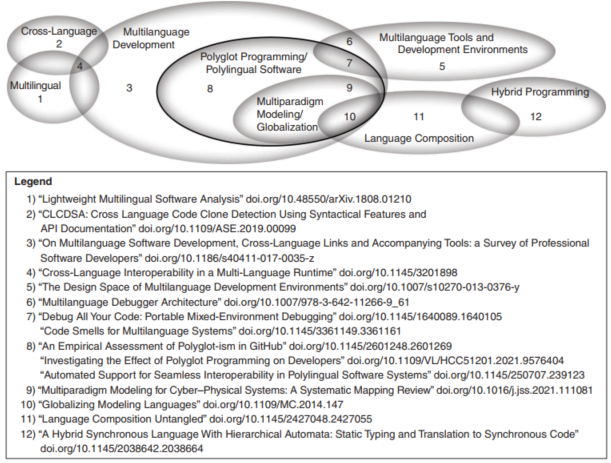
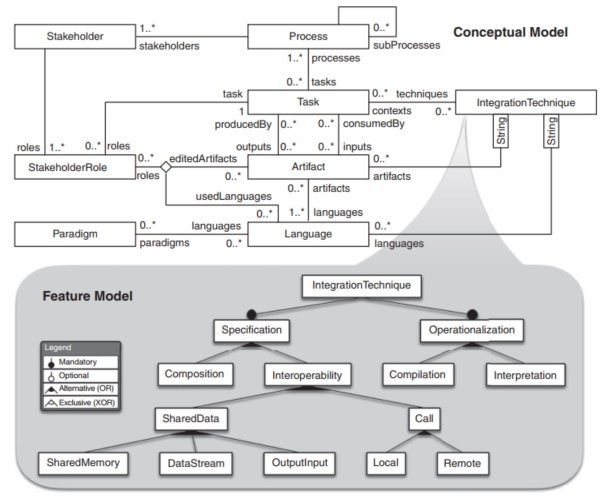
I'm not going to explain them in detail. If you're interested in learning more, don't hesitate to read the paper.
Terminologies
In the following section, I explained five commonly used words in this field in a very simple way and provided at least one real-world example and, where applicable, a code snippet.
Multilingual
Definition: "Multilingual" software development tools include all language-agnostic tools that can be reused across a well-defined range of existing languages. It's about the tooling ecosystem rather than writing code in multiple languages simultaneously.
Real-world examples → DevOps and code quality tools are prime examples. A tool like SonarQube is multilingual because it can analyse code smells and vulnerabilities in Java, Python, and JavaScript. Similarly, build automation tools such as Maven and CI/CD pipelines can orchestrate builds across diverse language ecosystems.
Cross-Language
Definition: "Cross-language" refers to tools that can operate across multiple languages while relating them. For example, when performing clone detection across different programs, the tool must not only work on both programs but also relate them.
Real-world examples →
- GraalVM extension for VS Code: This extension, built by the GraalVM team, allows developers to debug code across languages such as Java, Python, R, Node.js, and JavaScript. [3]
- CLCDSA (Cross Language Code Clone Detection using Syntactical Features and API Documentation): This is an academic research paper that introduces a tool for identifying identical logic (code clones) across different programming languages by mapping syntactic and API similarities. [4]
Polyglot Programming
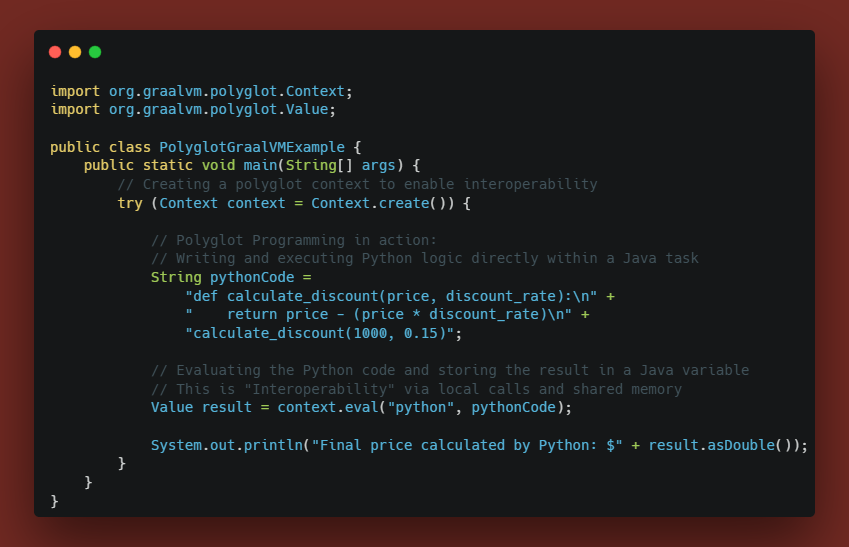
Definition: A task is polyglot if the developer actively edits artefacts in more than one language. This requires integrating different languages, often using techniques such as shared memory, data streams, or calling one language from another.
Real-world examples →
- Classic Example: Developing a full-stack web application where a developer writes a Java backend, a JavaScript frontend, and specifies views in HTML/CSS.
- Advanced Example (GraalVM): Running Python inside Java. Using GraalVM's Polyglot API, a developer can seamlessly call Python scripts from Java code and share data between them in the same memory space.
Hybrid Programming
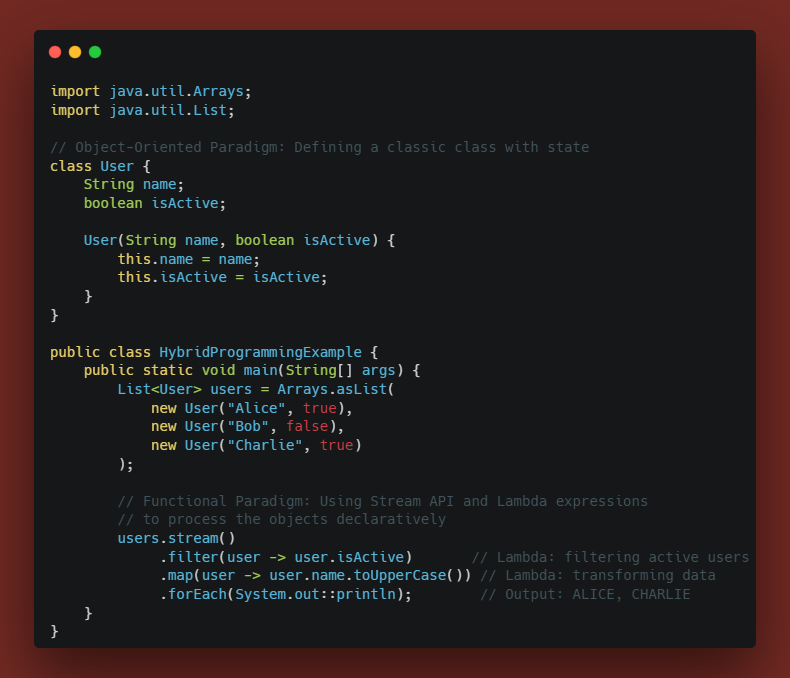
Definition: "Hybrid programming" refers to a single language that combines more than one paradigm (e.g., continuous and discrete programming, or object-oriented and functional) without using language integration techniques.
Real-world examples → Java is a perfect modern example. Traditionally, an Object-Oriented language, recent versions have heavily integrated functional programming features. When you write a class that uses Stream API, lambda expressions, or Optional types alongside traditional OOP structures, you are engaging in hybrid programming.
Language Composition
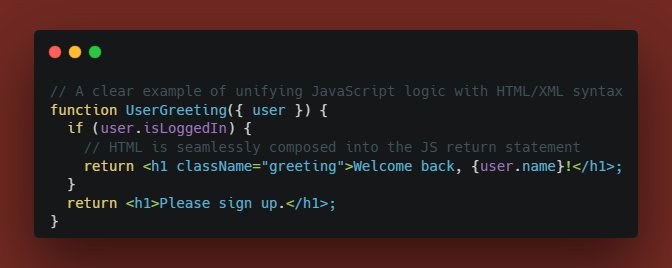
Definition: This refers to the foundational techniques for dealing with multiple languages, often involving the design and implementation of languages. This can range from embedding one language into another to unifying two languages at the syntax or semantic level.
Real-world examples →
- JSX (JavaScript XML) in React: It perfectly demonstrates unifying two languages at the syntax level. You are literally writing HTML tags inside JavaScript logic.
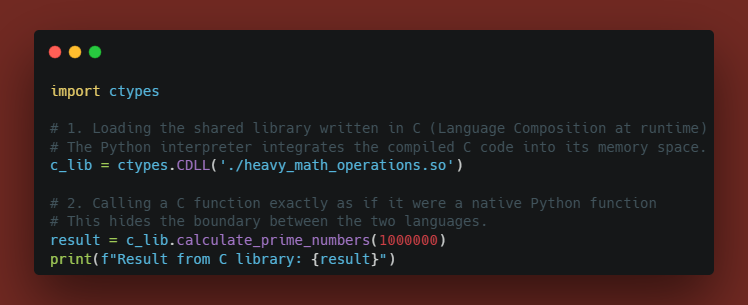
- Embedding C/C++ inside Python: Using standard libraries like
ctypesor tools likeCythonto execute highly optimised C code directly from a Python script.
Conclusion
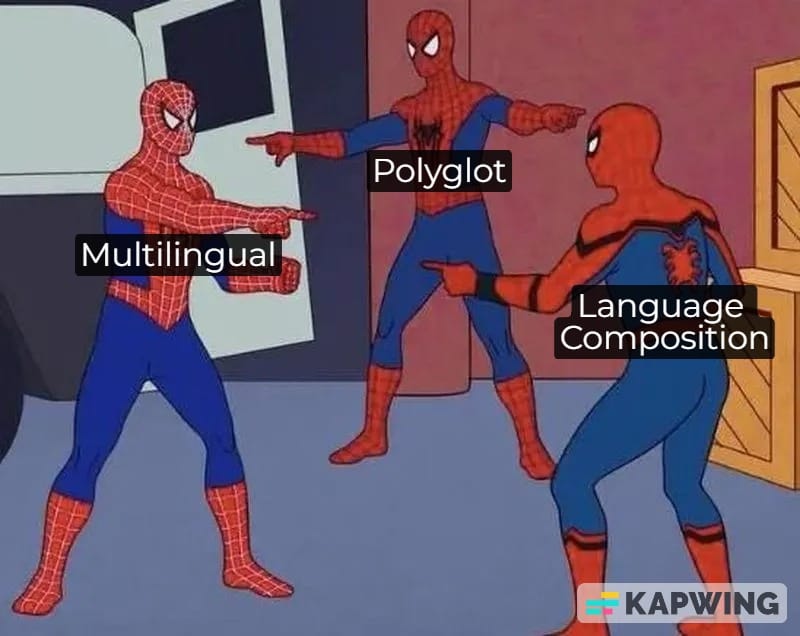
I hope you find this article useful, and don't get confused like the meme above. Let's recap the definitions:
- Multilingual: Tools that can work on several different languages independently, without needing to relate them to one another.
- Cross-Language: Tools that operate across multiple languages and actively relate them or establish connections between them.
- Polyglot Programming: When a developer actively writes and integrates code in more than one language to accomplish a specific task.
- Language Composition: The underlying foundational techniques used to combine, embed, or unify multiple languages at the syntax or execution level.
- Hybrid Programming: Combining multiple programming paradigms (e.g., object-oriented and functional) exclusively within a single programming language.
Quick Note: Language Composition is the technical infrastructure that connects languages under the hood, while Polyglot Programming is the developer's act of actually writing code across those languages to build an application.
In the future, I am going to post some related things to Polyglot, focusing on using Python within Java.
GOF :]
References
1.