
Abstract
Yo guys, welcome to today's blog post. I really like combining different fields of science to create something new. Here, I'm explaining how I've combined neuroscience, software engineering, and physical health.
Introduction
Warning! I'm not a neuroscience expert, but I'm super eager to understand how the brain works and processes information. I follow lots of resources from Andrew Huberman.
From my neuroscience research, the brain starts learning when you try to use what you read and feed it to your mind. Consequently, when you try to connect the gaps between different pieces of knowledge, some Synapses get created in your brain, which is awesome. That's when you really start learning things. In fact, we call these new synapses knowledge.
So, today, as a Software Engineering PhD student and developer, I wanna bridge a gap between two areas of knowledge I have.
How is software engineering related to nature?
I think computer science got lots of its ideas from nature, and we are really creators, like humans and other animals, which can reproduce and create another creature of their own kind; we can create some applications or very simple logic to act as we want. To be more Shakespearean, "the scribe of code doth breathe a fragment of his very soul into the woven script."
Technical Debt
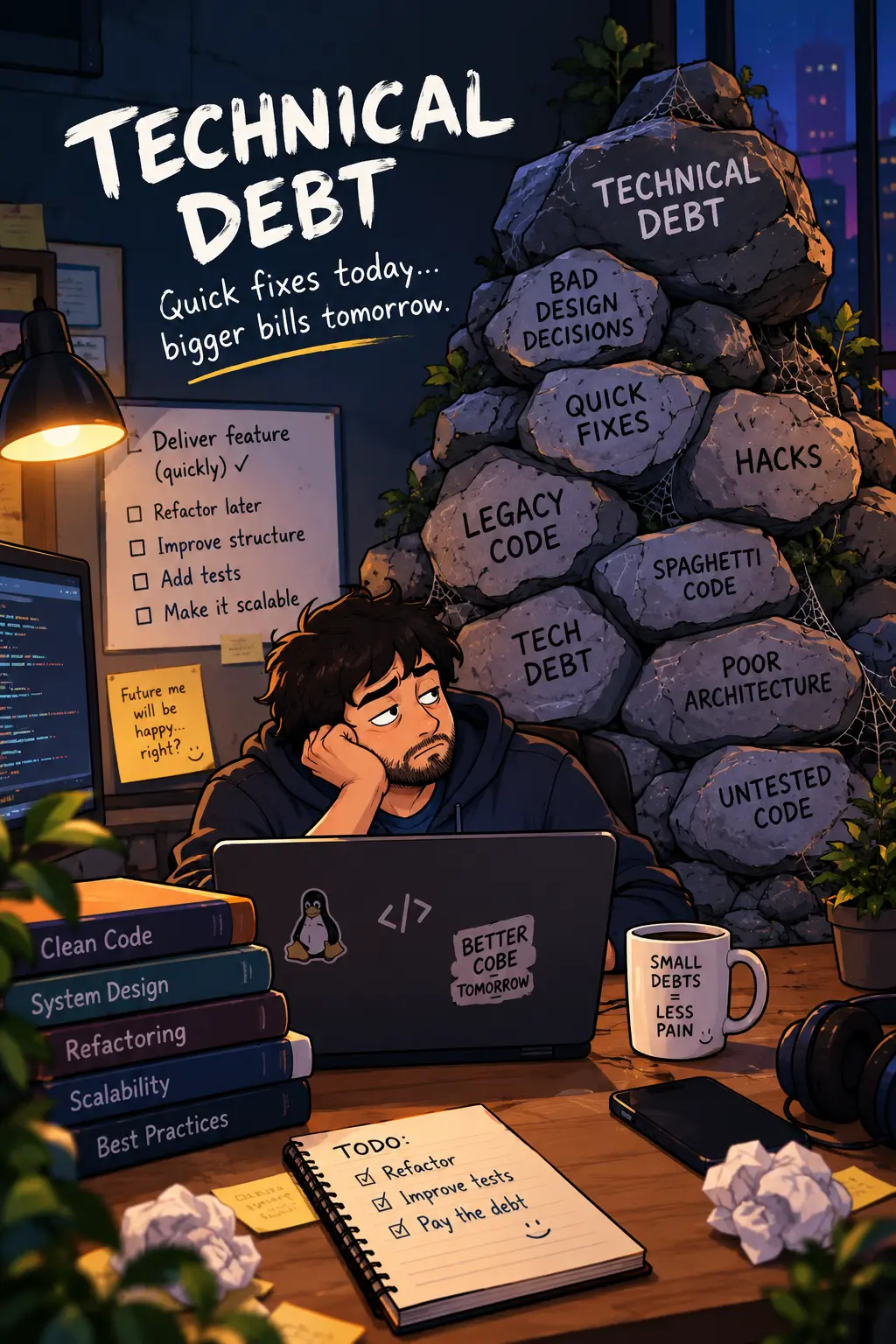
In software engineering, we have a term called "Technical Debt". This term refers to debt developers create, consciously or unconsciously, to achieve higher-priority goals. Let's elaborate on this concept with an example. Let's say a company has a deadline to deliver what customers asked for to compete with its competitor. So, developers might not have enough time to implement that specific feature in a way that's structured, extensible, and scalable. This decision makes future development harder and more frustrating. In this scenario, to meet the deadline, the development team decided to lower their standards and do it the dirty way (not the best way). Developers should put time and effort into restructuring and designing the system using best practices to ensure it's scalable and easily extendable. Otherwise, these technical debts ("bad design decision" could be one example) will stack on top of each other and somewhere, somehow, when you don't expect it, will come back to you for settlement, and you should pay soooooo much.
Physical Debt
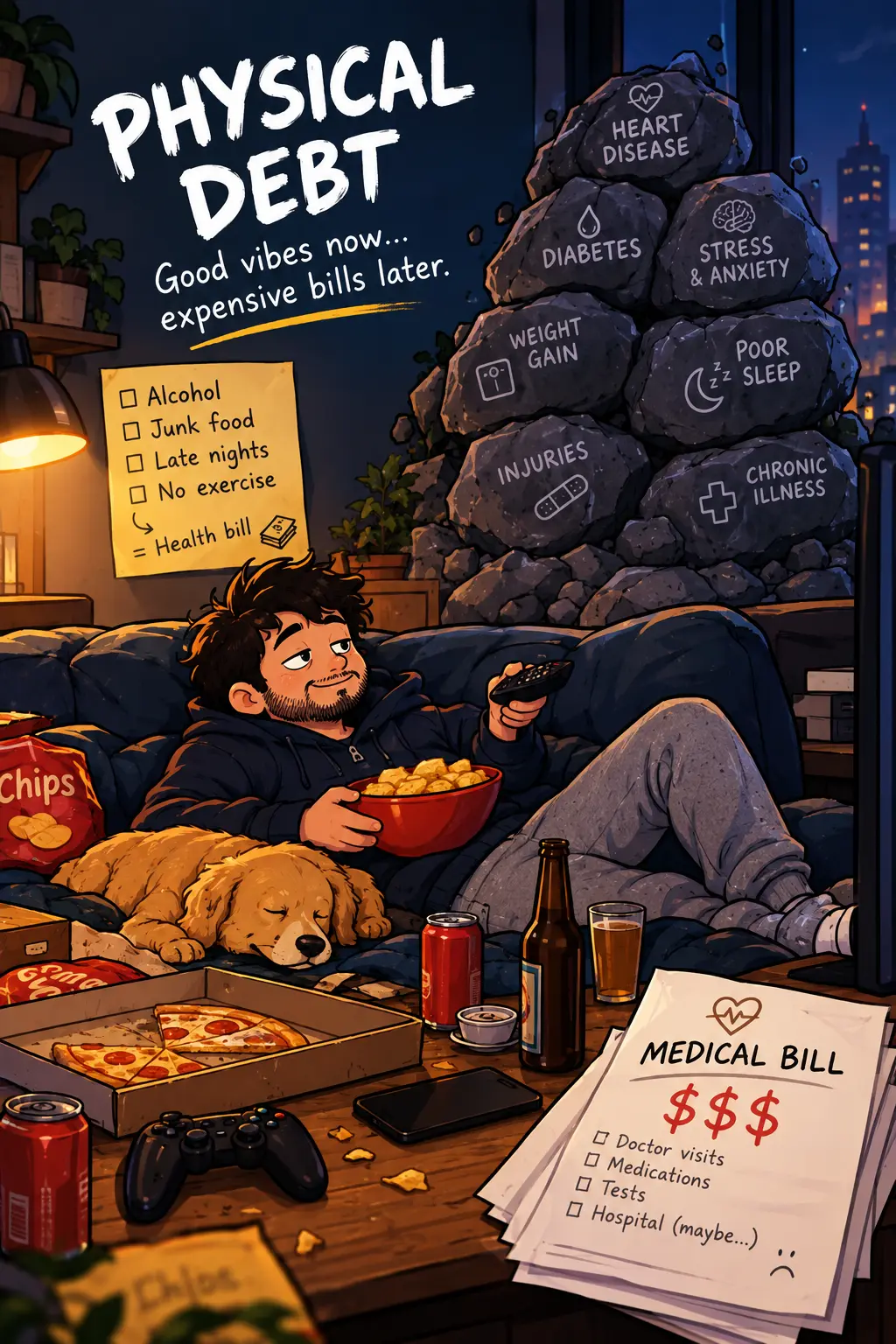
I have invented a word called "Physical Debt" (I searched and didn't find any similar post). haha! Yeah, I'm talking about the time you are drinking alcohol, eating very fatty and oily food (OMG that's super delicious), staying up late at night, or being a lazy potato on the couch and not doing any exercise at all. These might seem fun for the moment, fair. But each of them will stack on top of each other and create a big and expensive bill, technically a health bill.
So, it's up to you: you can make your bill lighter and cheaper by paying your small debt by doing some simple things now, or you're gonna enjoy medical treatments when you get old, hopefully if nothing really bad happens.
Going back to Andrew Huberman (believe me, I don't get any cash for advertising him, haha; he's a super cool guy), he suggests some great, simple tricks to avoid this heavy debt. I won't go into them, but I'll leave the link here. If you are interested in this topic, you can follow it: Andrew Huberman: The Real Reason You Can't Get Deep Sleep & Wake Up Exhausted
Conclusion
To wrap up, just be careful how you code your life program to avoid heavy debts and have fun at the same time. If you followed the post this far, you might have noticed I used humor, which I find essential in every aspect of life. My next post is about that, keep in touch.
GOF :]
